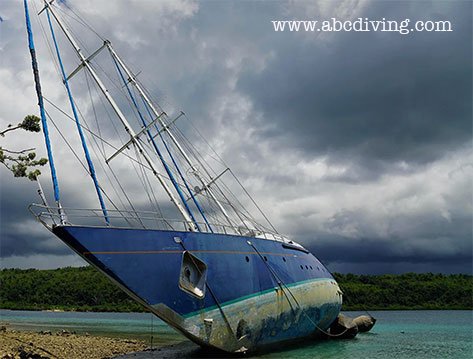
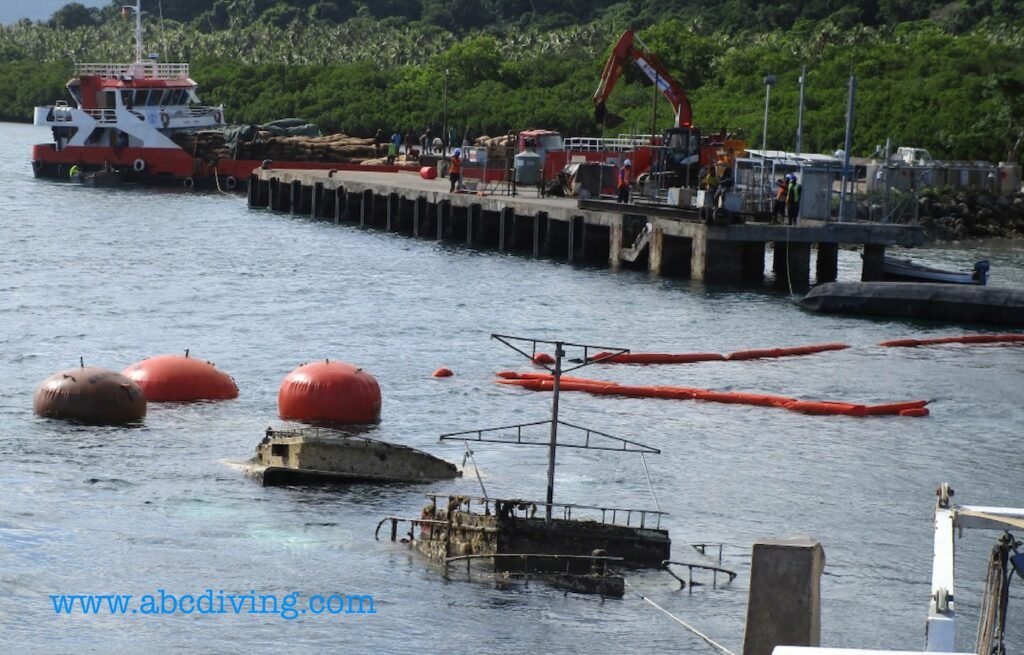
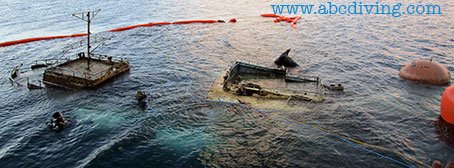
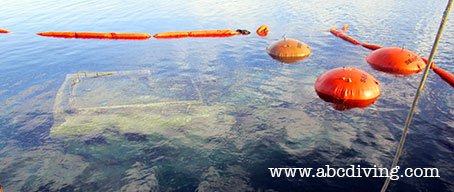
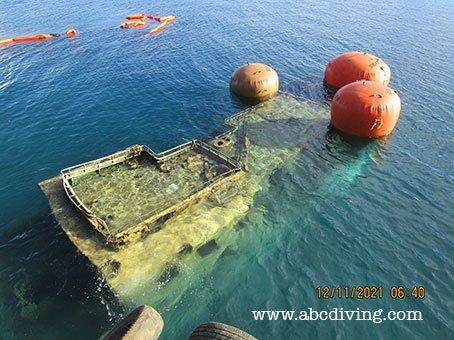
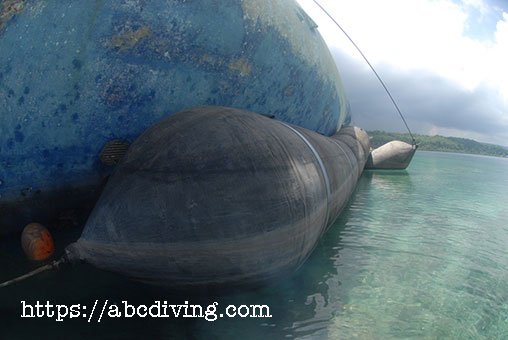
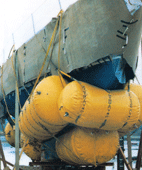
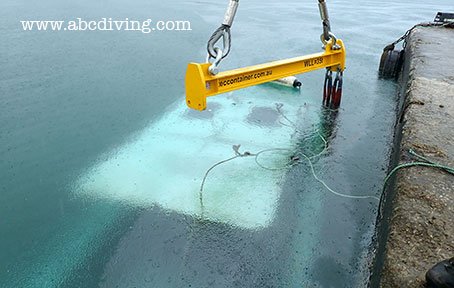
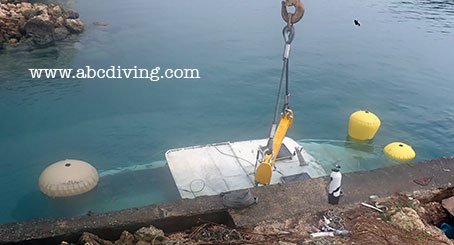
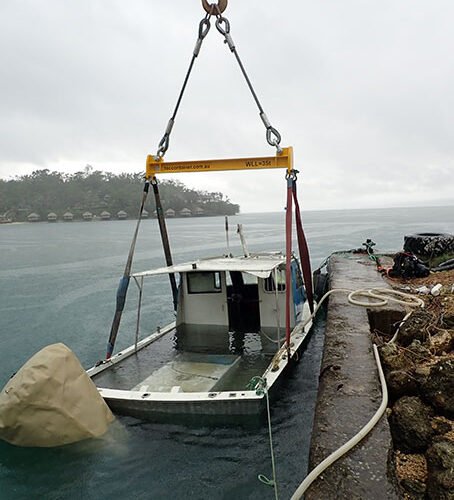
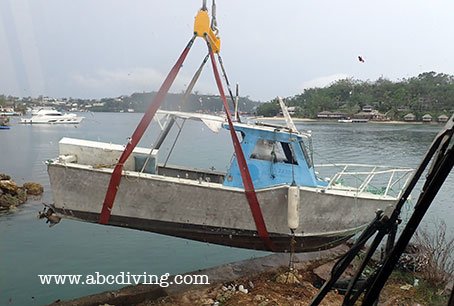
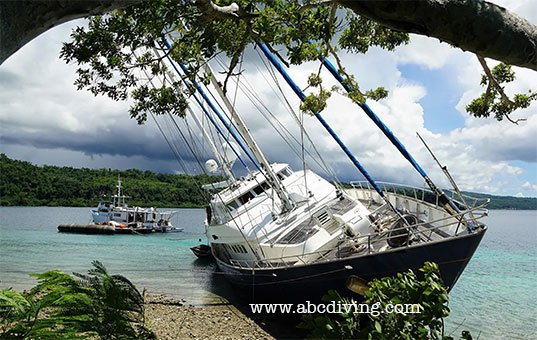
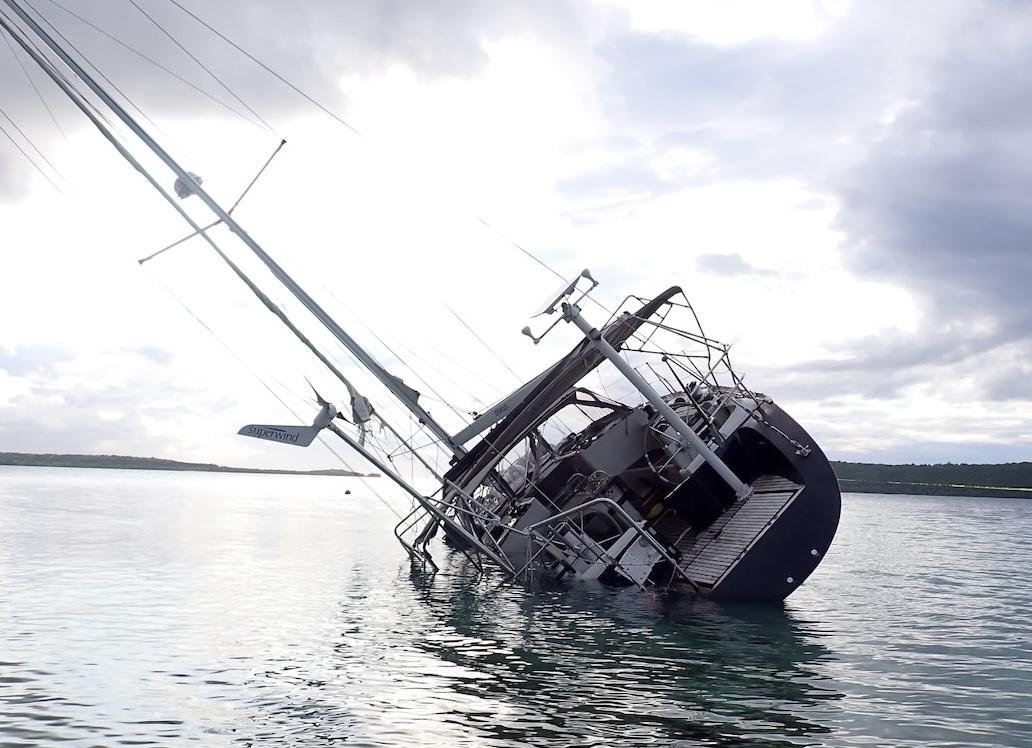
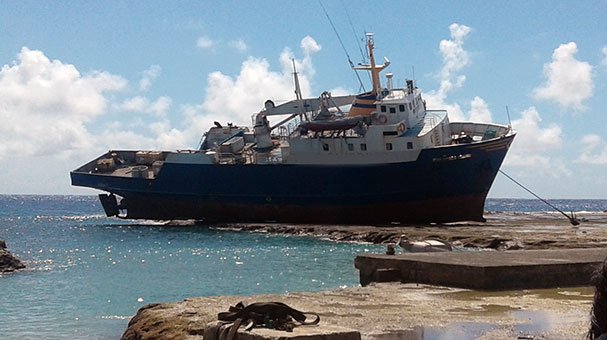
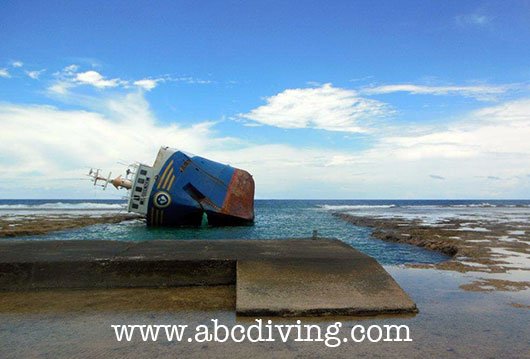
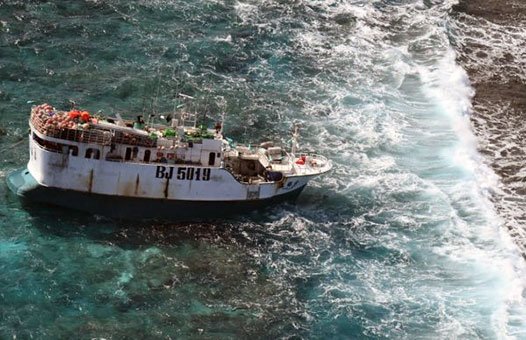
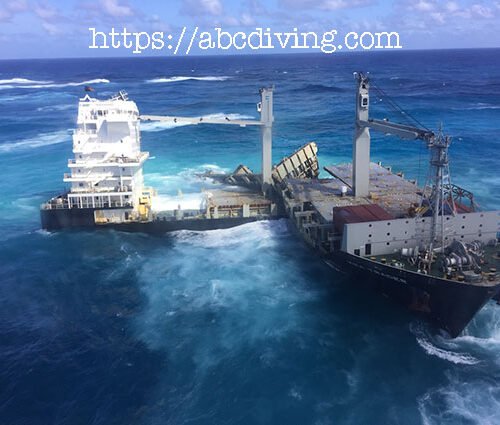
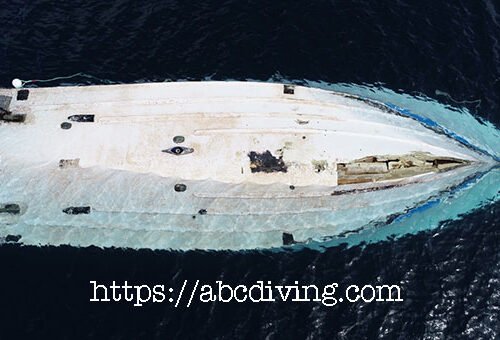
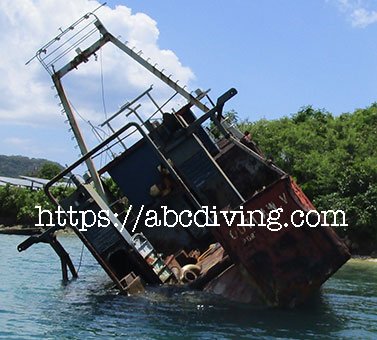
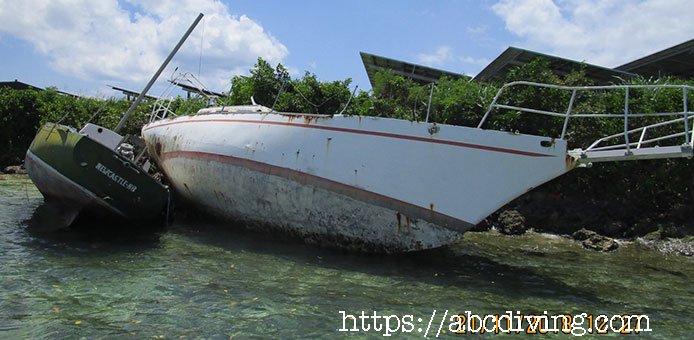
Old GRP fishing vessel torn from its mud bed and brought to the surface to clear access to the wharf
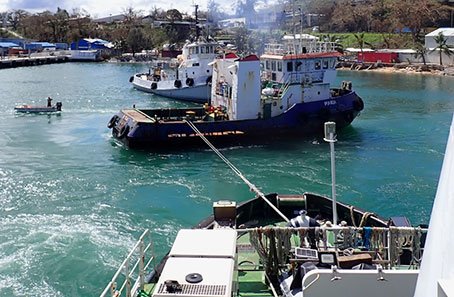
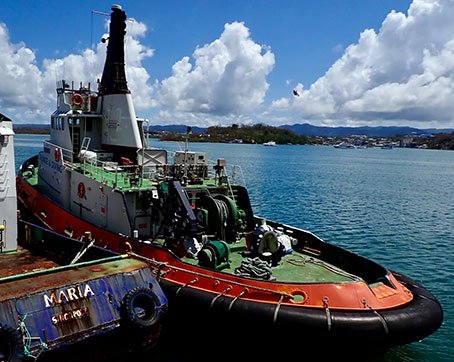
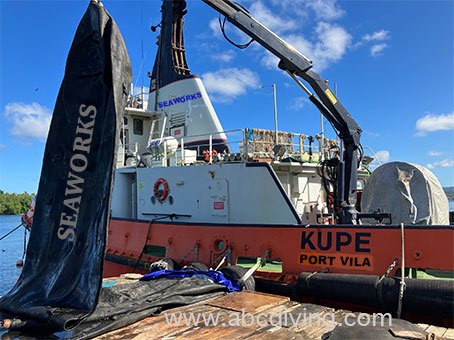
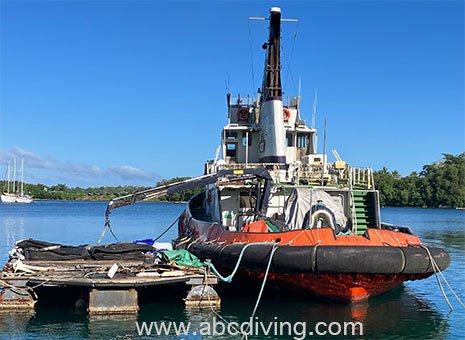
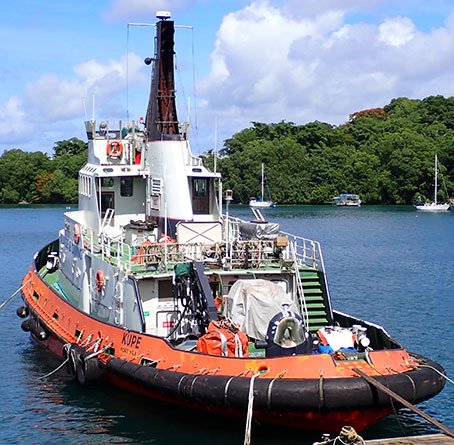
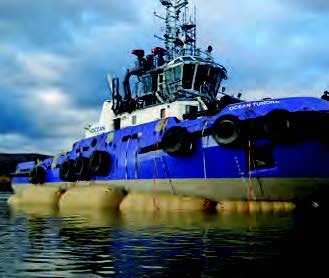
Multidirectional Voith Schneider Tractor KUPE in action
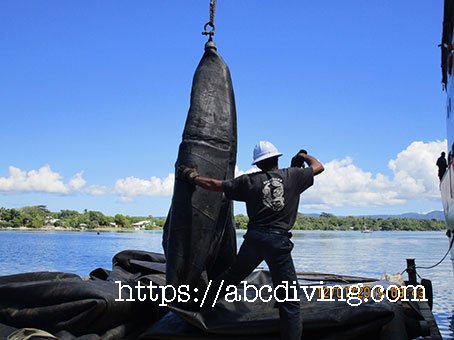
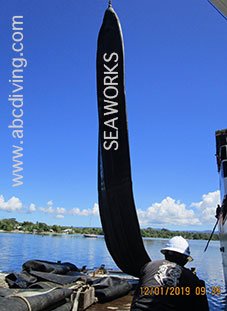
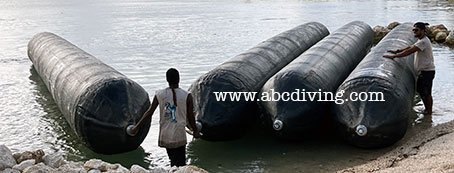
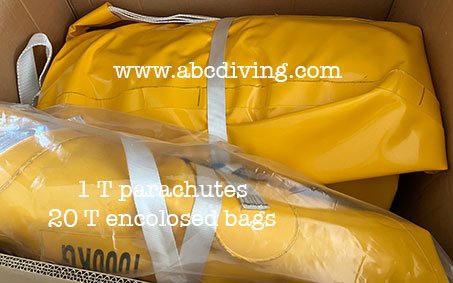
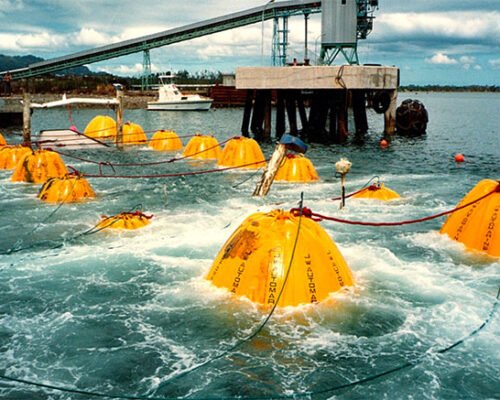
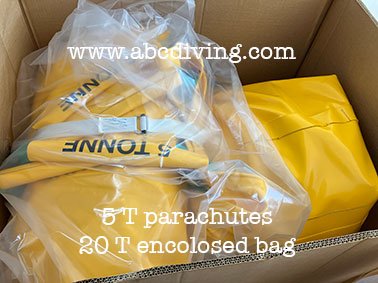
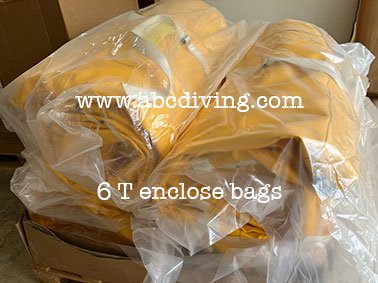
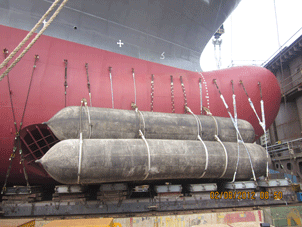
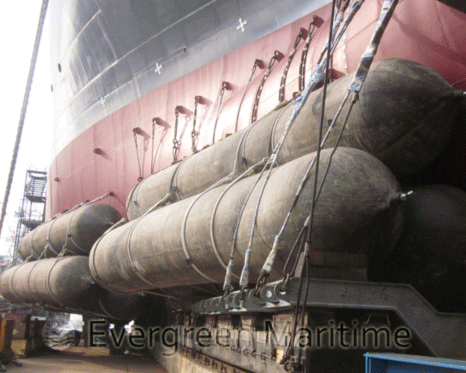
Enclosed Structures: Salvage air bags (91 tonnes), Launching air bags (585 tonnes), JW Enclosed bags (40 tonnes,
Open Structures: Parachutes (150 tonnes).
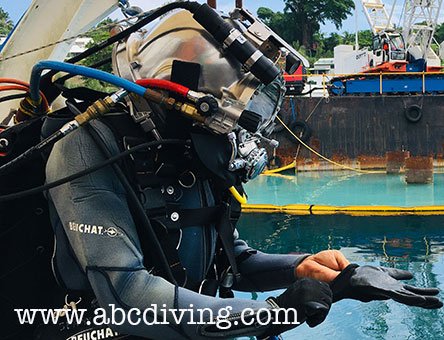
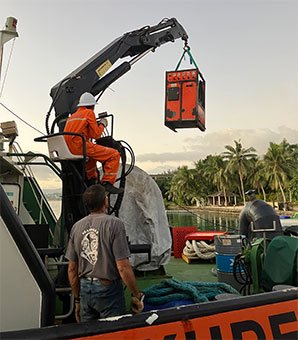
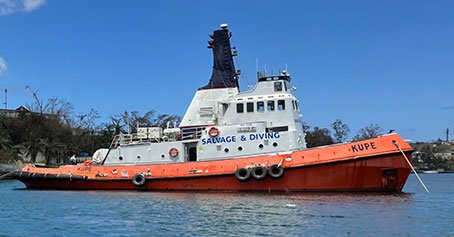
Salvage Tug Mobilisation (KUPE is usable as Dive Support Vessel).
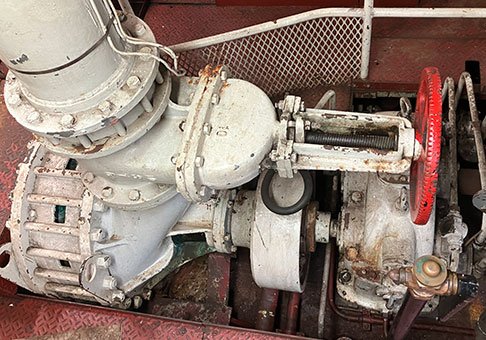
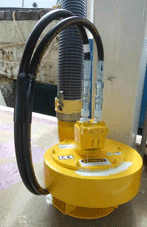
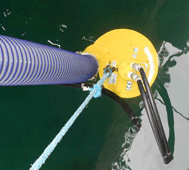
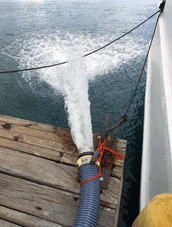
Powerful Fire Pump with Merryweather “Aquator”. Submersible Hydraulic Trash Pump (capacity 800 gpm / 3028 lpm).
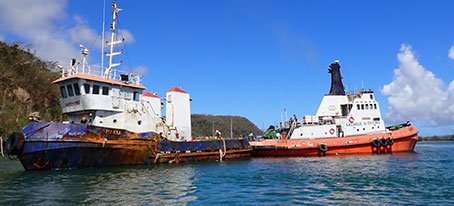
Voith Schneider Tractor KUPE (32 m x 9 m, 302 GT): the state-of-the-art in Ship Handling and Salvage
- A sensitive thrust in any direction without changing her heading
- A capability to manoeuvre large vessels into confined channels and docks
- A large protection guard beneath the propellers allowing an increasing bollar pull even in shallow water
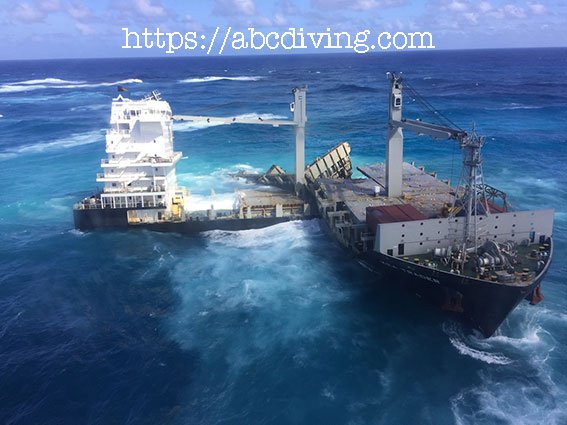
Based in PORT-VILA (Vanuatu) we are operational H24 to get under way and perform in crisis demand situations.
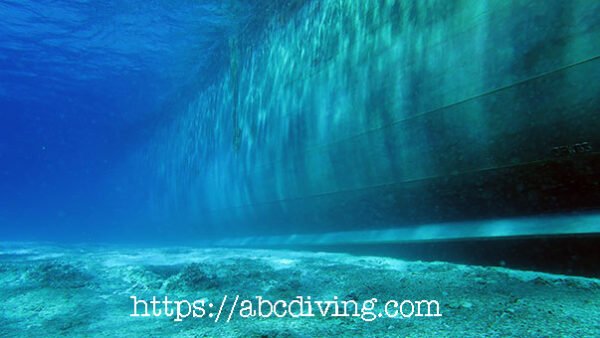
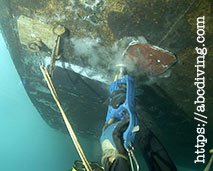
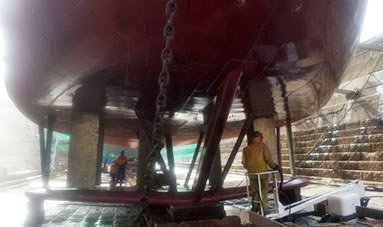
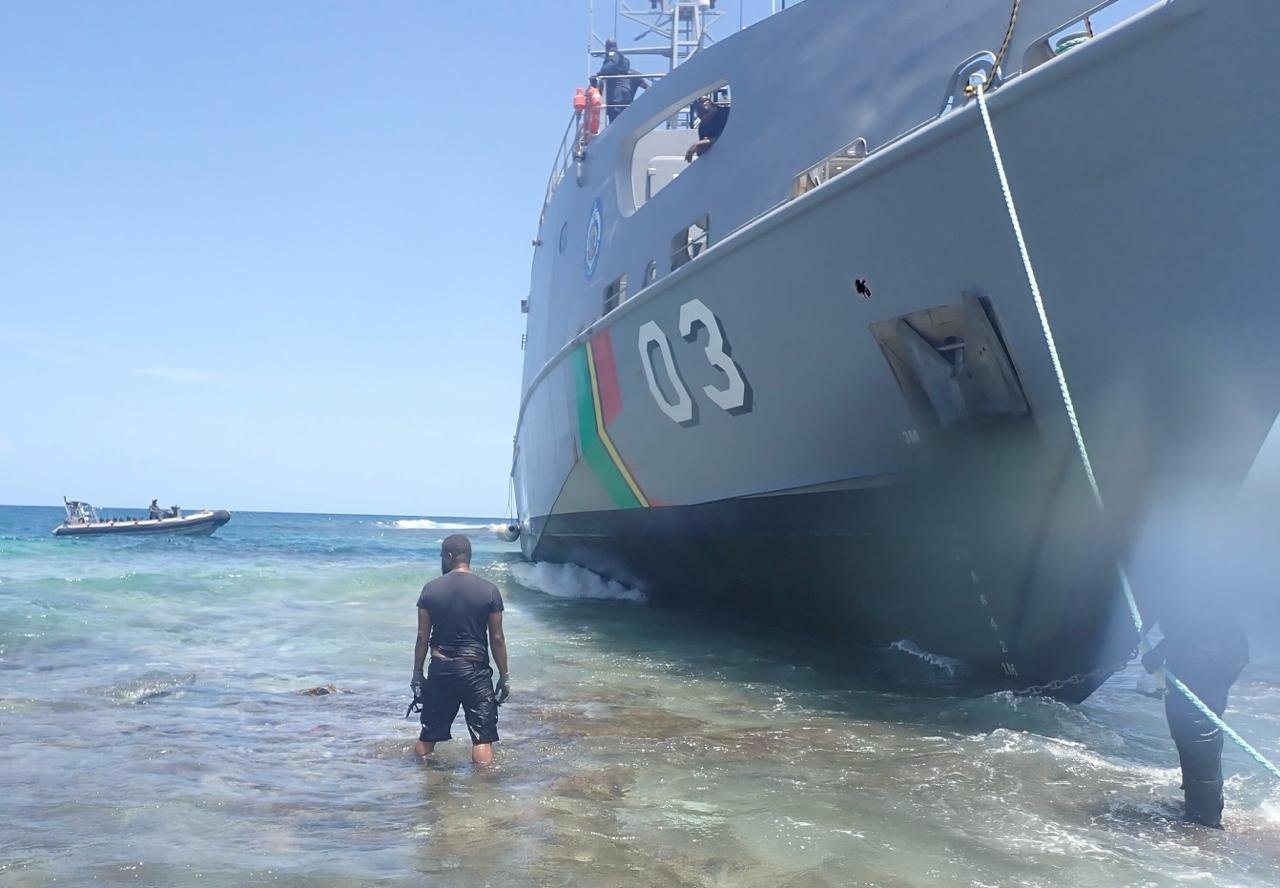
We can give assistance to all vessels by fixing hull suffering from damage (underwater patching on all materials), engineering issues (propulsion & hydraulic systems), etc..